
Qualcosa si è rotto irrimediabilmente nella galassia di sinistra del calcio internazionale, nell’ottobre del 2023. La faida Celtic-St. Pauli sul supporto alla Palestina ha compromesso – forse per sempre – l’immagine di quello che fino ad allora era considerato il club più a sinistra al mondo. Gli Ultras Sankt Pauli, il principale gruppo del tifo amburghese, non sono certo l’unica formazione ultras in Germania ad avere una posizione contraddittoria su Israele, ma mentre altre hanno preferito evitare di schierarsi pubblicamente gli USP hanno ingaggiato una vera e propria guerra a distanza con la Green Brigade del Celtic Glasgow. La conseguenza è stata che molti fan-club internazionali del St. Pauli, a partire da quello della città scozzese, hanno deciso clamorosamente di sciogliersi. Da allora, il St. Pauli si è conquistato la triste fama di club sionista, perdendo molta della popolarità che aveva all’estero. Eppure, sebbene poco visibile e raccontata, una sua parte non ha mai abbandonato la causa palestinese.
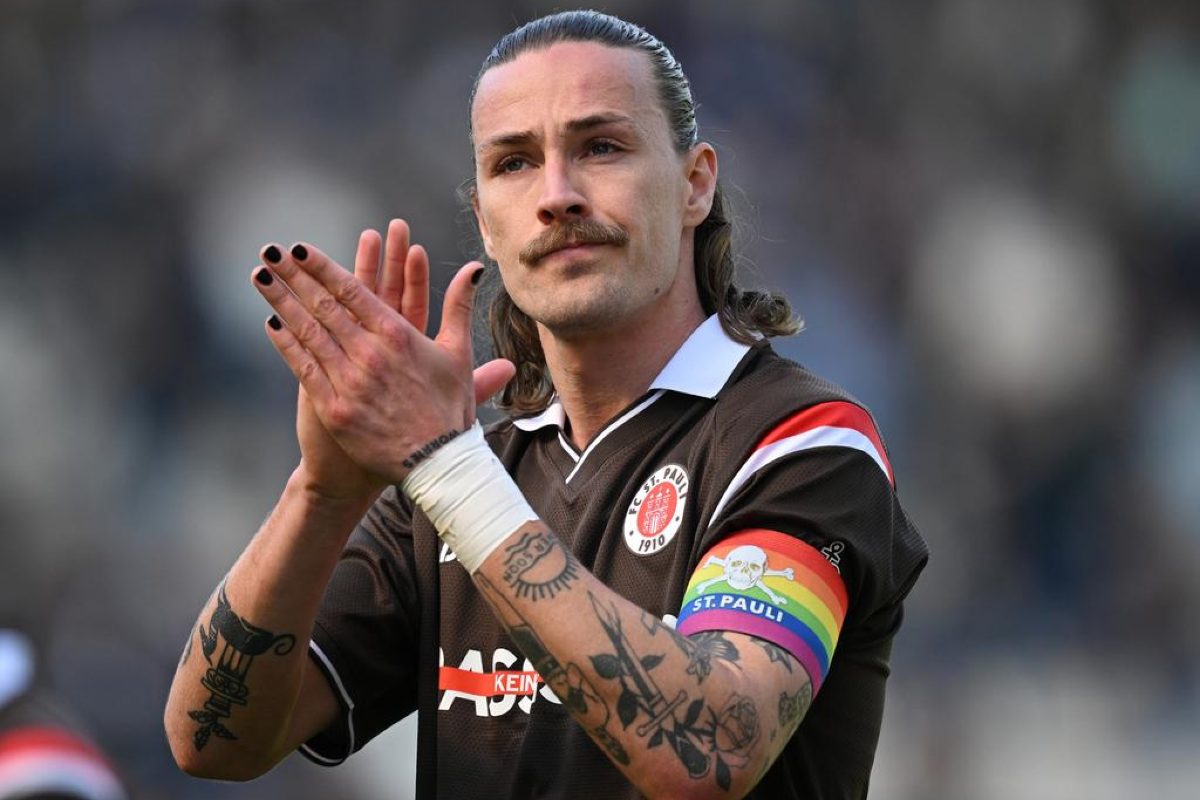
Il primo segnale di dissenso era arrivato addirittura dal più rappresentativo e amato dei calciatori del club, il capitano Jackson Irvine, nel novembre 2023. Irvine, centrocampista australiano all’epoca 30enne, era stato tra i promotori di una donazione all’Oxfam da parte dei Socceroos per fornire aiuti umanitari alla popolazione di Gaza. “Supporto ogni causa umanitaria. – aveva spiegato a ESPN – La morte dei civili è una tragedia in ogni conflitto e questo ha la priorità nel discorso”. Nel suo messaggio, Irvine aveva anche espresso la propria solidarietà e quella di tutta la squadra australiana ai colleghi palestinesi, prima della partita delle qualificazioni mondiali che aveva visto sfidarsi le due selezioni. Il capitano del St. Pauli ha preso posizione per la Palestina sui suoi canali social anche in seguito (l’ultima volta lo scorso dicembre), ma la stessa cosa è stata fatta anche da altri due giocatori della società amburghese, Dapo Afolayan ed Elias Saad.
Anche all’interno del tifo qualcosa si è mosso, sebbene gli USP restino il gruppo più influente e indiscutibilmente schierato su posizioni pro-Israele (sebbene molto critiche nei confronti di Netanyahu). Nel maggio 2024 Massimo Finizio, direttore del sito TuttoStPauli.com e tra i fondatori del gruppo di tifosi Brigate Garibaldi, spiegava al Manifesto che “Il Sankt Pauli sta con il popolo palestinese, non con Hamas. Siamo contro l’apartheid e chiediamo di fermare il massacro di Gaza. Allo stadio spicca lo striscione con le parole di Irvine sul cessate il fuoco” e “la bandiera palestinese è appesa nel pub principale del club nel cuore del quartiere”. A inizio dicembre Stefano Severi – un altro membro delle Brigate Garibaldi e redattore di TuttoStPauli.com – delineava invece un quadro un po’ più complesso, parlando con Il Post: “Nel St. Pauli ci sono 40-50mila persone, ci sono opinioni diverse e c’è un dibattito nella società e tra i tifosi; forse noi come Brigate Garibaldi sulla Palestina siamo in minoranza”.
“Le voci sioniste sono più rumorose e sono davvero organizzate” mi ha spiegato Sebastian Clare, un tifoso irlandese del St. Pauli che da quasi nove anni vive in Germania. “Non c’è un vero modo di sapere con esattezza, senza un qualche tipo di sondaggio, che proporzione di tifosi o membri del club supporti la Palestina”. Il contesto interno alla società e ai suoi fan è quindi molto complicato e di difficile definizione; “‘Teso’ è la parola che userei. – continua Clare – Questo riflette l’atmosfera generale in Germania, a essere onesti. Molte persone sono sconvolte da ciò che l’IDF sta facendo, ma sono ridotti al silenzio dalle possibili accuse di antisemitismo”. Dice che il St. Pauli, al momento, è “uno spazio conteso”: non è vero che sia pro-Israele, ma neppure che sia pro-Palestina. Nel suo piccolo, Clare sta facendo il possibile per raccontare un lato poco noto e visibile della sua squadra del cuore.
Dal febbraio 2024, Sebastian Clare gestisce una pagina su Instagram chiamata fcsp.4.falastin, che sta per “Football Club St. Pauli per la Palestina”. Come tanti tifosi che supportano la causa palestinese, è rimasto molto colpito dalla frattura tra St. Pauli e Celtic. “Come membri del St. Pauli avevamo due opzioni: lasciare il club o combattere per esso. Molti fan-club internazionali hanno scelto la prima strada, e li rispetto per questo. Hanno difeso i loro principi, anche se gli è costato qualcosa che amavano. Non è una cosa semplice. Comunque, restare e continuare a supportare la squadra nonostante la presenza di tifosi sionisti non era altrettanto facile”. Clare ha cercato se esistessero pagine sui social che rappresentavano i tifosi del St. Pauli pro-Palestina, ma non ne ha trovate. “Dopo tre o quattro mesi di assalto dell’IDF a Gaza, con crescente frustrazione ho chiesto ad alcuni amici tifosi se dovessi essere io a organizzare qualcosa. Le risposte furono positive, così da allora ho iniziato a postare quotidianamente”.
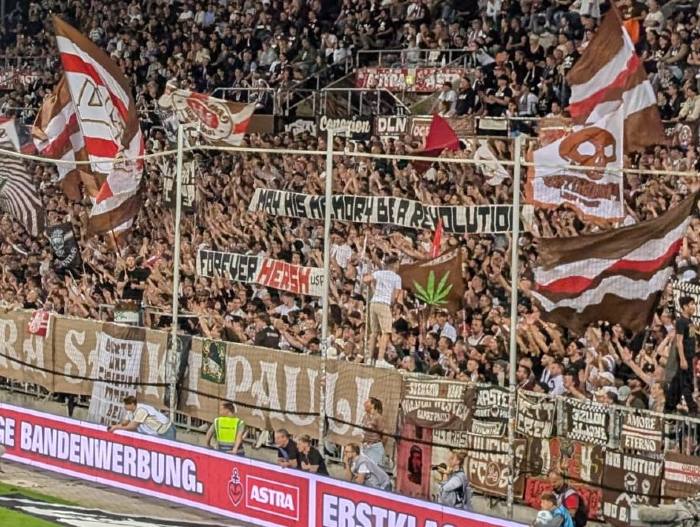
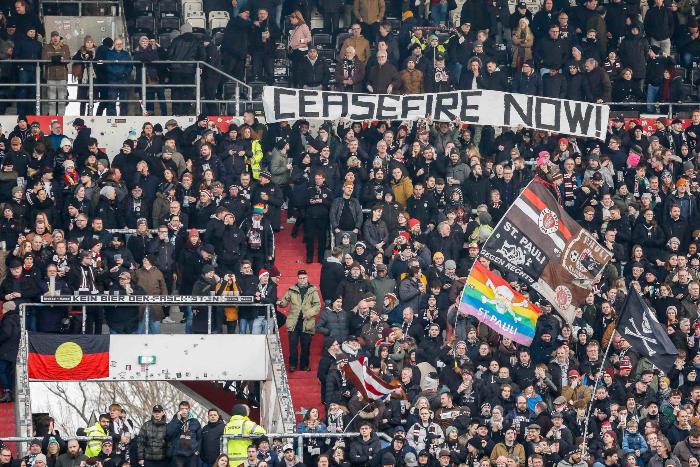
In quasi un anno di attività su Instagram, fcsp.4.falastin ha superato i 1.100 follower, e tra di essi si trovano anche alcuni profili illustri come il Clapton CFC, Nicolò Rondinelli (autore del libro Ribelli, sociali e romantici. FC St. Pauli tra calcio e resistenza), Welcome To Hell (un podcast settimanale in inglese sul St. Pauli), alcuni fan-club stranieri (come quello di Chicago e quello di Bursa), le Brigate Garibaldi e vari profili di tifosi della squadra amburghese. La pagina pubblica varie grafiche che uniscono i simboli del St. Pauli a quelli della causa palestinese, come la bandiera nazionale o la kefiah, ma anche stickers (come quelli contro Netanyahu), diversi graffiti pro-Palestina presenti nel quartiere che dà il nome alla squadra, le parole di Irvine, messaggi di supporto alla campagna Red Card for Israel o a manifestazioni pro-Palestina ad Amburgo. E poi la cosa più sorprendente, striscioni e bandiere: il primo, un grosso striscione con su scritto “Cessate il fuoco ora!”, è stato esposto il 1° marzo nella trasferta di Gelsenkirchen dai tifosi-podcaster di Welcome to Hell; altri il 9 agosto, durante l’amichevole contro l’Atalanta, sono apparsi nel settore Gegengerade (il rettilineo) dello stadio, tra cui un “Free Palestine”.
“Il club non vieta le bandiere nazionali in quanto tali, ma i singoli gruppi di tifosi lo fanno. In particolare, gli USP, che hanno sede nella Südkurve, hanno un divieto del genere e sono i più ostili ai sentimenti pro-Palestina. – mi spiega ancora Clare – Tuttavia, una o due volte abbiamo visto bandiere palestinesi sugli spalti, in particolare durante l’amichevole contro l’Atalanta”. Sono ancora pochi, ma i simboli per la Palestina dentro lo stadio Millerntor ogni tanto spuntano, e sono cosa più unica che rara negli stadi tedeschi. Un’altra conferma mi arriva LOGO, una designer e cantautrice italiana tifosa St. Pauli: è stata lei a contattarmi su Instagram lo scorso novembre, segnalandomi che il sentimento pro-Palestina tra i tifosi è in realtà forte, anche grazie a Jackson Irvine. Ed è stata sempre lei a farmi conoscere il progetto fcsp.4.falastin, rivelandomi un lato della questione St. Pauli-Palestina che fino a quel momento mi era sconosciuto.
“Ho ricevuto solo sporadiche critiche e attacchi da parte dei sostenitori sionisti, anche se questi sembrano aumentare man mano che crescono i follower e i tifosi del St. Pauli si sentono più coraggiosi nel parlare della Palestina” aggiunge infine Clare, a proposito della sua pagina su Instagram. Il mondo del tifo e le sue dinamiche sono molto complessi e si prestano spesso alle semplificazioni: un gruppo ultras, per quanto influente, non è mai davvero rappresentativo dell’intera tifoseria, né tantomeno del club come concetto più esteso. Nell’ulteriore complessità del contesto tedesco sul tema israelo-palestinese, le varie esperienze nel St. Pauli confermano che il piccolo club di Amburgo è ancora una volta un caso particolare. In cui, sebbene a fatica, anche le voci a sostegno della Palestina stanno cercando di conquistarsi un proprio spazio.
Se questo articolo ti è piaciuto, aiuta Pallonate in Faccia con una piccola donazione economica: scopri qui come sostenere il progetto.
There is a St. Pauli that stands with Palestine
Something irreparably broke in the left-wing galaxy of international football in October 2023. The Celtic-St. Pauli feud over support for Palestine severely damaged – perhaps permanently – the image of what had been considered the most leftist club in the world. The Ultras Sankt Pauli (USP), the main supporters’ group of the Hamburg club, are certainly not the only ultras in Germany with a contradictory stance on Israel. However, while others chose to avoid taking a public position, the USP engaged in an all-out proxy war with Celtic Glasgow’s Green Brigade. The fallout was significant: many international St. Pauli fan clubs, starting with the one in Scotland, made the dramatic decision to disband. Since then, St. Pauli has earned the unfortunate reputation of being a Zionist club, losing much of its international popularity. Yet, though less visible and rarely discussed, a part of the club has never abandoned the Palestinian cause.
The first sign of dissent came from none other than the club’s most representative and beloved player, captain Jackson Irvine, in November 2023. Irvine, a 30-year-old Australian midfielder, was among the initiators of a donation by the Socceroos to Oxfam to provide humanitarian aid to the people of Gaza. “I support any humanitarian cause.” he explained to ESPN. “The deaths of civilians is a tragedy in any conflict and that’s got to be the priority of the conversation”. In his statement, Irvine also expressed his solidarity – and that of the entire Australian team – with Palestinian colleagues ahead of the World Cup qualifying match between the two sides. The St. Pauli captain continued to voice support for Palestine on his social media channels afterward, most recently in December. Similar gestures were made by two other players of the Hamburg club, Dapo Afolayan and Elias Saad.
Within the fanbase, shifts have occurred, although the USP remains the most influential group and firmly aligned with pro-Israel positions (albeit strongly critical of Netanyahu). In May 2024, Massimo Finizio, director of the website TuttoStPauli.com and co-founder of the Brigate Garibaldi fan group, explained to the Italian newspaper Il Manifesto: “St. Pauli stands with the Palestinian people, not Hamas. We are against apartheid and demand an end to the massacre in Gaza. The banner with Irvine’s call for a ceasefire is prominent in the stadium, and the Palestinian flag hangs in the club’s main pub in the heart of the neighborhood”. However, in early December, Stefano Severi – another Brigate Garibaldi member and contributor to TuttoStPauli.com – painted a more complex picture while speaking to Italian news website Il Post: “St. Pauli consists of 40-50,000 people; there are diverse opinions and debates within the club and its supporters. Perhaps we as Brigate Garibaldi are in the minority on Palestine issue”.
“Zionist voices are loudest and are actually organised.” explained to me Sebastian Clare, an Irish St. Pauli fan who has lived in Germany for nearly nine years. “There really is no way to know, without some poll, exactly what proportion of St. Pauli fans and/or members support Palestine”. The internal context of the club and its fanbase is therefore highly complex and difficult to define. “‘Tense’, is the word I’d use. – Clare continued – This reflects the atmosphere in Germany generally, to be honest. Most people are appalled by what the IDF is doing, but are cowed into silence by potential accusations of antisemitism”. He described St. Pauli as “a contested space” at the moment: it is not true it is pro-Israel, but neither that it is pro-Palestine. In his own way, Clare is doing his best to shed light on a lesser-known side of his beloved club.

Since February 2024, Sebastian Clare has been running an Instagram page called fcsp.4.falastin, which stands for “Football Club St. Pauli for Palestine.” Like many fans who support the Palestinian cause, he was deeply affected by the rift between St. Pauli and Celtic. “As an FC St. Pauli member, we had two options: leave the club, or fight for it. A lot of the international fan clubs chose the former, and I respect them for it. They stood by their principles even though it cost them something they love. That is no easy thing. However, staying, and continuing to support the team despite the presence of Zionist fans is also not easy”. Clare searched for social media pages representing pro-Palestine St. Pauli fans but found none. “About three or four months into the IDF assault on Gaza, with growing frustration I asked a few fellow St. Pauli fans if it should be me who set something up. The responses were positive so I’ve been daily posting ever since”.
In nearly a year of activity on Instagram, fcsp.4.falastin has surpassed 1,100 followers, including some notable profiles such as Clapton CFC, Nicolò Rondinelli (author of Ribelli, sociali e romantici. FC St. Pauli tra calcio e resistenza), Welcome to Hell (a weekly English-language podcast about St. Pauli), several international fan clubs (such as those in Chicago and Bursa), the Brigate Garibaldi, and various profiles of Hamburg supporters. The page shares a lot of graphics combining St. Pauli symbols with those of the Palestinian cause, such as the national flag or the keffiyeh, as well as stickers (including anti-Netanyahu designs), graffiti supporting Palestine found in the neighborhood that gave the team its name, quotes from Irvine, messages of support for the Red Card for Israel campaign, and posts about pro-Palestinian demonstrations in Hamburg. Perhaps most striking are the banners and flags: the first, a large banner reading “Ceasefire Now!”, was displayed on March 1 during the away match in Gelsenkirchen by the Welcome to Hell fans-podcasters. Others appeared on August 9 during a friendly match against Atalanta, in the Gegengerade (main stand) section of the stadium, including one that read “Free Palestine”.
“The club doesn’t ban national flags as such, but individual fan groups do. Specifically, Ultras Sankt Pauli, based in Südkurve, have just such a ban, and they are the most hostile to pro-Palestine sentiments. – Clare explains – However, once or twice we’ve seen Palestine flags in the stands, most notably at the friendly against Atalanta”. While still rare, symbols supporting Palestine occasionally appear inside the Millerntor Stadium, something almost unheard of in German stadiums. Another confirmation comes from LOGO, an Italian designer and songwriter who is a St. Pauli supporter. She contacted me last November on Instagram, pointing out that pro-Palestinian sentiment among fans is actually strong, partly thanks to Jackson Irvine. And it was her too who introduced me to the fcsp.4.falastin project, revealing an aspect of the St. Pauli-Palestine issue that I had been unaware of until then.
“We have only received sporadic criticisms and attacks from Zionist supporters, though these seem to be increasing as we get more followers and more St. Pauli fans become emboldened to speak out about Palestine” Clare adds, speaking about his Instagram page. The world of football fandom and its dynamics are incredibly complex and often lend themselves to oversimplifications: an ultras group, no matter how influential, is never truly representative of the entire fanbase, let alone the club as a whole. Within the additional complexity of the German context regarding the Israeli-Palestinian issue, the various experiences at St. Pauli confirm that the small Hamburg club is, once again, a unique case. Here, though with difficulty, voices supporting Palestine are also trying to carve out their own space.
If you enjoyed this article, support Pallonate in Faccia with a small donation: click here to find out how to contribute to the project.
 Pallonate in faccia
(Tradotto con Google)
Ciao da Amburgo.
Prima di tutto, grazie per aver creato questo sito web! Tali progetti sono importanti e dovrebbero essere sostenuti!
Purtroppo in questo articolo sono presenti alcuni errori. Alcuni fatti sono solo piccoli frammenti e non sono necessarie ulteriori informazioni per classificarli. Se sei interessato posso spiegarti la cosa in modo più dettagliato. Chiamare il St. Pauli un “club sionista” non è giusto, non è bello e stai demonizzando un intero club che è in gran parte dalla parte giusta di questo sporco business del calcio!
-Il bar Shebeen non è il più grande bar per fan e nemmeno il secondo più grande.
-L’USP non è filo-israeliano e non ha mai veramente commentato il conflitto
-Le persone che hanno assistito all’azione nel test match contro l’Atalanta di solito non vengono allo stadio perché non hanno preso i biglietti.
-La bandiera della Palestina è “sparita” molto rapidamente perché le bandiere nazionali sono vietate in tutto lo stadio (fan rule)
-c’erano (sfortunatamente) molti meno striscioni filo-palestinesi di quanto suggerisci
Alex
Titolare di abbonamento (da molto tempo)
Membro del club
Membro della cooperativa
(Translated with Google)
Hello from Hamburg.
First of all, thank you for making this website! Projects like this are important and should be supported!
Unfortunately, there are a few errors in this article. Some facts are just small fragments, and further information is missing to put them into context. If you are interested, I can explain it to you in more detail. Calling St. Pauli a “Zionist club” is not fair, not cool, and you are demonizing an entire club that is largely on the right side in this dirty football business!
-the Shebeen bar is not the biggest fan bar, not even the second biggest.
-USP is not pro-Israel and has never really commented on the conflict
-the people who did the action at the friendly match against Atalanta would otherwise not come to the stadium because they couldn’t get tickets. -the Palestine flag was “gone” very quickly because national flags are banned in the entire stadium (fan rule)
-there were (unfortunately) significantly fewer pro-Palestine banners than you suggest
alex
Season ticket holder (for a very long time)
Member of the club
Member of the cooperative
"Mi piace""Mi piace"
Sorry, but what you write is incorrect:
– I never said St. Pauli is a “Zionist club”, but I said that its critics think it is (and I quote some of them);
– the position of the USP is precisely explained in a link to another article, with sources that confirm what I wrote;
– I don’t suggest anything about pro-Palestine banner, but I quote (and show) only the ones that were seen; I never said there are more of them.
"Mi piace""Mi piace"